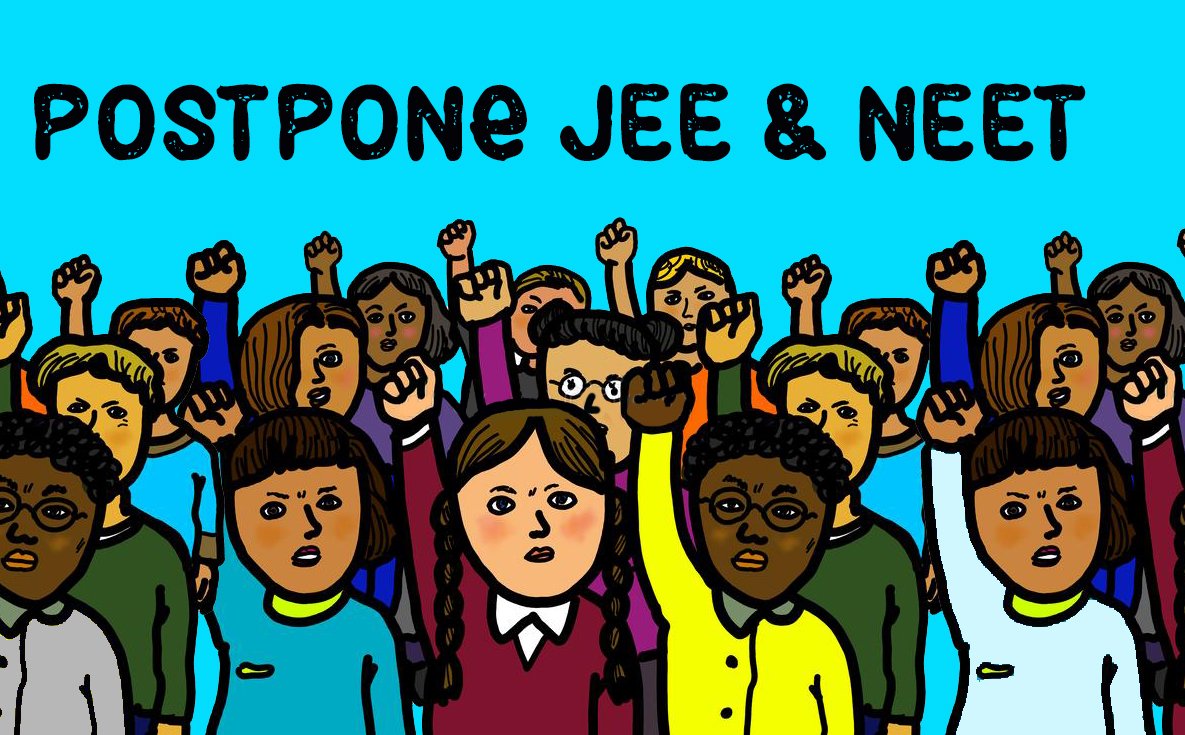
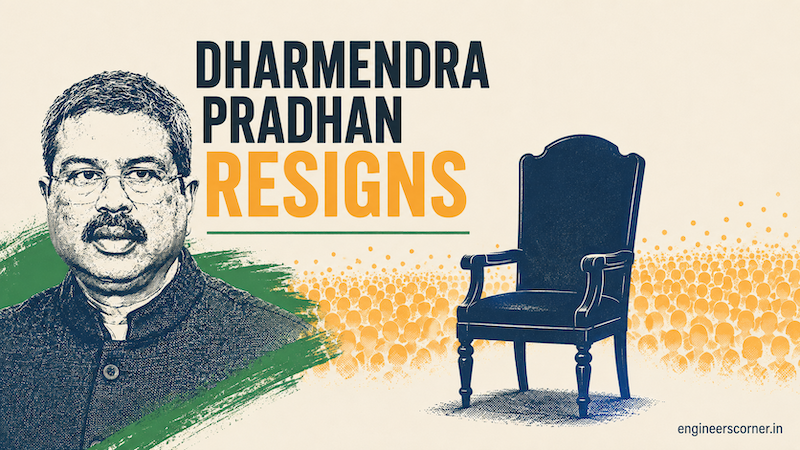
At around 2 pm on Saturday, 25 July, police fired tear gas shells at protesters gathered at Jantar Mantar in central Delhi. Within the hour, a letter in Hindi appeared on Dharmendra Pradhan’s X account. He had sent his resignation to the Prime Minister.
By evening the stage at Jantar Mantar had been dismantled, mobile internet was restored across central Delhi after nearly a week of blackout, the Cockroach Janta Party had withdrawn a 36-day sit-in “in good faith”, and Pralhad Joshi had been handed additional charge of the Education Ministry.
That is the fastest reversal Indian student politics has produced in over a decade.
This article covers what actually happened, what the government agreed to and what it did not, how every side is reading it, what the internet did with it, and the part almost nobody is talking about: the five reform demands that are still sitting on a table with a four-week deadline attached.
The 48 hours that ended it
Update, 26 July 2026: In a fresh video message, Prime Minister Narendra Modi has announced a high-powered task force on examination
reforms to be led by Infosys co-founder and Aadhaar architect Nandan Nilekani. Details of the mandate, membership and timeline are awaited. This section will be updated as official details are confirmed.
Thursday, 23 July, near midnight. The Prime Minister posted a video message announcing fast-track courts for paper leak cases and a tougher Bill. It was his first substantive public response after weeks of protest. CJP spokesperson Ashutosh Ranka rejected it within hours, saying paper leaks were not happening because India lacked fast-track courts.
Thursday night into Friday. Union Ministers J.P. Nadda and Jitendra Singh visited Sonam Wangchuk at Medanta Hospital in Gurugram. He ended his 26-day hunger strike after written assurances on a parliamentary discussion, compensation for families and no cases against peaceful protesters. He later said he feared an imminent crackdown and wanted to prevent violence, recalling the September 2025 firing on youth in Ladakh.
Friday, 24 July. Second round of talks. Nadda said the CJP had brought three main demands and five reform suggestions. The Centre agreed in principle on compensation and FIR withdrawal, and asked for time till Saturday afternoon on the resignation. That evening the Union Cabinet, meeting at the Parliament House complex, cleared a draft Bill amending the Public Examinations (Prevention of Unfair Means) Act, 2024.
Saturday, 25 July, morning. Ranka posted that the resignation was non-negotiable and that if the government said no, there was no point continuing discussions. Eighteen Delhi Metro stations were shut from 7:30 am. Abhijeet Dipke announced he had been diagnosed with typhoid and said the fight would continue. Delhi Police confirmed a fifteenth FIR, this one invoking attempt to murder over the violence near Rail Bhavan.
Saturday afternoon. Tear gas at Jantar Mantar. Then the resignation letter.
Saturday evening. Third round of talks at the Constitution Club. Government accepts the remaining demands. CJP withdraws the agitation nationwide. President Droupadi Murmu accepts the resignation. Pralhad Joshi gets additional charge.
What Pradhan actually said
His letter was in Hindi, addressed to the Prime Minister. Three things in it are worth reading carefully, because different people are reading them very differently.
He said he had taken responsibility for the NEET paper leak from day one, and that people in responsible positions had tried to create obstacles and mislead students.
He said the decision was not a matter of personal prestige, that India’s youth power is the country’s real strength, and that it was his resolve not to let the country’s youth get trapped in a web of confusion.
And he framed the timing this way: considering the situation at Jantar Mantar and across the country, so that anti-national forces do not take advantage, so national unity remains intact, so that no student’s future gets entangled in legal complications, and so that children can spend their time studying and building careers, he had sent his resignation.
Supporters read that as a dignified exit taken to defuse a situation. Critics read the “anti-national forces” line as a refusal to accept that students had a legitimate case. Both readings are available in the same paragraph, which is probably deliberate.
What the government agreed to, precisely
This matters more than the headline, because “all demands accepted” is doing a lot of work in the coverage.
Agreed and delivered:
- Pradhan’s resignation. Done, accepted by the President, successor appointed the same day.
Agreed, with wording to watch:
- Compensation. The CJP asked for Rs 1 crore per family. Nadda said the government will give “honourable compensation” to families of students who died by suicide after the NEET cancellation, “within rules”. Ranka’s own account was that the government agreed to give honorary compensation to those families under whatever rules and regulations allow. Note the gap between “Rs 1 crore” and “whatever the rules allow”. The figure has not been confirmed.
- FIR withdrawal. The government agreed to withdraw FIRs against protesters in Delhi and other BJP-ruled states, to provide copies of the FIRs, and that no action would be taken. Fifteen FIRs are on record, one of which invokes attempt to murder. Withdrawal of cases in non-BJP-ruled states was not part of the same undertaking.
Not agreed:
- The public apology. The CJP’s demand for an apology from the Rapid Action Force and the Delhi Police Commissioner remains pending. The party has said so itself.
Parked for four weeks:
- The five-point reform charter. Nadda said the government would think deeply about it and act after further discussion with the delegation. Both sides will meet again in about four weeks.
So the accurate summary is that three immediate demands were resolved, one apology demand is unresolved, one compensation figure is unspecified, and the entire structural reform agenda has been converted into a future meeting.
The five reforms nobody is reporting
This is the part that will determine whether anything actually changed for the student writing NEET in 2027.
The CJP’s exam manifesto, first released at Savitribai Phule Pune University on 11 June, asks for:
1. Rs 10,000 hardship compensation to every candidate when an exam is leaked, cancelled or postponed at short notice, covering travel, accommodation, coaching and study material. If results are delayed beyond a month, another Rs 10,000 per month for administrative failure.
2. A mandatory backup exam date within 72 hours. Every major exam must have a pre-decided backup day and contingency plan in place before it is conducted.
3. Physical evaluation of answer sheets for pen-and-paper exams, a direct response to the CBSE On-Screen Marking failure.
4. Automatic age limit relaxation when an exam or result is delayed by the conducting body.
5. Mandatory technology and tender audits for computer-based tests, covering both the platform and the procurement process used to select the vendor.
Read those against what actually happened this year. NEET was cancelled on 12 May and the re-exam was on 21 June, roughly six weeks of limbo with the student absorbing every rupee of cost. Class 12 boards produced over 70,000 grievance applications, more than 63,000 of them asking for full re-evaluation. NEET moves to computer-based testing from 2027, which removes the physical custody problem and introduces platform risk, exactly what demand five is aimed at.
A resignation fixes accountability for the past. These five would fix incentives for the future. Only one of them has actually been secured.
Every side of this, fairly
The government
Its position, consistently stated, is that it acted. NEET-UG 2026 was cancelled in full rather than partially, which is the more student-protective and far more disruptive choice. The case went to the CBI. Parliamentary Affairs Minister Kiren Rijiju said the Prime Minister told the NDA parliamentary meeting that thirteen people had been arrested, that the government stands with students, and that paper leaks are a national concern rather than a political issue. The Re-NEET was held under tighter security with biometric verification. Cabinet cleared the amendment Bill within 24 hours of the PM’s announcement.
Rijiju acknowledged Pradhan’s long engagement with public life and student welfare. Pralhad Joshi, before taking charge, credited Pradhan with implementing NEP 2020 and over 100 reforms in education, and said stepping down did not stop him contributing to national development. On accepting the portfolio, Joshi said he took the responsibility with a sense of duty and humility.
The BJP’s line on the protest itself has been harder. Ministers accused opposition parties of using the demonstrations for political mileage. BJP MP Kangana Ranaut said MPs inside Parliament had feared a mob attack on 20 July and credited Delhi Police for acting as a shield. The party warned students that opportunistic political parties were infiltrating the protest.
The opposition
Rahul Gandhi called the resignation a huge step in rebuilding the education system, and a symbolic one because Pradhan was a symbol. He also said India’s education system was once the country’s glory but has for years been under attack, captured and privatised, and that the protests were a reaction to that as much as to unemployment. Earlier in the day, before the resignation, he had said shifting Pradhan to another ministry would not be acceptable and demanded he be sacked.
Mallikarjun Kharge said the Prime Minister should apologise to the youth and take strict action against those who used lathis and pellet guns. AAP’s Manish Sisodia said Pradhan did not resign voluntarily, that the country’s students secured it, and that a voluntary resignation would have come when the leak happened. Priyanka Gandhi addressed students directly, telling them not to let their spirit be oppressed.
The opposition also spent five consecutive sitting days shutting down the Lok Sabha over this, which drew the government’s counter that refusing a debate sent the wrong signal.
The CJP
Dipke’s first reaction to the resignation was “We have done it.” He then made clear the agitation was not over, saying they had two more demands and adding that cockroaches, once they enter, do not leave. Hours later, after the third round of talks, the party withdrew everything.
Saurav Das’s formal language at the joint press conference was careful: the CJP withdraws the agitation in good faith, with the understanding that the agreed terms will be executed within the agreed timelines. Ranka added that the demands were not radical but basic, and that the two sides would meet again in four weeks to review the agreement and discuss reform.
That phrasing is doing something specific. “In good faith” and “agreed-upon timelines” is the language of a movement that knows assurances can decay, and is building in a public checkpoint.
Sonam Wangchuk
He called the resignation a victory of peace, patience and perseverance. He had already drawn criticism for ending his fast before the resignation came, and defended himself by asking whether he needed a character certificate after 26 days without food. His wife Gitanjali Angmo had separately raised questions about police presence outside his ICU, which the hospital disputed with its own timeline of events.
The students at the site
The celebration footage from Jantar Mantar is worth watching for the texture of it. Protesters dancing on stage to “Chak De India”, holding up portraits of B R Ambedkar, waving the tricolour, chanting Vande Mataram. One protester walked the site holding a copy of the Constitution, saying the young generation was here, that this was a win for the Constitution, and that they were not a lazy generation.
That last line is the whole movement in one sentence. It started because a courtroom remark called unemployed young people cockroaches and parasites.
Parents and families
The least-covered constituency in this entire story. The compensation demand exists because families lost children. The CJP’s July memorandum cited 21 deaths by suicide following the NEET-UG 2026 cancellation, based on the party’s own records, a figure that has not been independently verified. Behind the 70,000 CBSE grievance applications are 70,000 households that spent a year of fees, tuition and hope on a result they no longer trust.
There is also a quieter cost. Reporting from the protest site described women protesters and volunteer doctors struggling with cut water supply and no accessible toilets, with some forced to leave. Sitting in a protest for 36 days is not free, and it was mostly borne by families with the least slack.
What the internet did with it
The online dimension is not decoration here. It is how this movement worked.
The CJP existed because of a social media post. Its Instagram account crossed 3 million followers in 78 hours in May, passed the BJP’s official handle within five days, and settled above 20 million. When MeitY had its X account withheld under Section 69A on 21 May, the party was back under a new handle within minutes.
By July, Instagram and X had become extensions of the physical protest. Reporting from Delhi, Mumbai, Indore, Udaipur and Hyderabad described a distinctly Gen Z register: memes, reels, and layered irony rather than slogans. One user mocked the delay in Pradhan’s resignation by joking that employment opportunities are low in India, which is why he was not resigning. A creator posted a GRWM video about getting ready to witness the downfall of the government, listing a spine and jhumkas among what she was wearing. Another showed off eyeliner that survived the march because her foundation was strong, unlike the government. Someone noted on X that the protest site was playing songs from Rang De Basanti and Swades.
The sentiment pattern, as far as it can be read from public posts and coverage:
- Before 20 July: mostly humour and frustration. High volume, low intensity. Satire as the primary mode.
- 20 to 23 July: a sharp shift after the tear gas and lathi charge. Anger displaces jokes. Solidarity marches in other cities. Wrestler Bajrang Punia posted that the metro was shut, roads shut, internet shut, attempts made to suppress the voice, but the one thing still open was paper leaks. Kapil Sibal appealed publicly for food to be allowed to reach protesters.
- 24 to 25 July: two competing narratives running simultaneously. One treating the resignation as proof that sustained non-violent pressure works. The other, from government supporters, arguing the movement was a packaged campaign given Dipke’s past as an AAP social media volunteer, and pointing to the fifteen FIRs and reported police injuries.
- After the withdrawal: celebration, and then almost immediately a second wave of caution from within the movement’s own supporters, asking what happens to the five reforms and whether “honourable compensation within rules” means anything concrete.
That last turn is the healthiest signal in the whole story. A movement that immediately interrogates its own victory is behaving like a durable one.
It also has to be said plainly that follower counts are not votes, and virality is not organisation. The CJP is not registered with the Election Commission and cannot contest an election. What it demonstrated is that a distributed online movement can now impose a political cost quickly. What it has not demonstrated is that it can sustain one.
The underlying problem that has not gone anywhere
A minister resigned. None of the following changed on Saturday.
Exam integrity. NEET-UG 2026 was written by over 23 lakh candidates on 3 May and cancelled nine days later. Reported investigation findings describe a courier employee allegedly enabling access to question paper trunks, portable scanners making digital copies, files routed through servers set up for the purpose, and a roughly 150-page guess paper PDF circulating on Telegram and WhatsApp, of which around 140 questions reportedly matched the actual paper. Answers were allegedly sold for sums running to Rs 30 lakh.
Evaluation integrity. CBSE mandated On-Screen Marking for Class 12 in February and declared results on 13 May. Students reported blurred scans, missing pages, mismatched sheets and unmarked answers. The pass percentage fell to 85.20 percent from 88.39 percent, the lowest in seven years. Over 70,000 grievance applications followed. The OSM contract reportedly went to the lowest bidder, and a 19-year-old security researcher had disclosed vulnerabilities in the portal to CERT-In in February, most of which were reportedly still unpatched when results were published.
The jobs picture underneath it all. The PLFS Annual Report for 2025, released in March 2026, put overall unemployment for people aged 15 and above at 3.1 percent. The same report put youth unemployment for ages 15 to 29 at 9.9 percent, urban youth unemployment at 13.6 percent, and unemployment among graduates at 11.2 percent, more than three times the national average.
Put those together and you understand why an exam is not one step among many for an Indian student. It is the entire ladder. Which is why a leaked paper does not feel like a scheduling problem. It feels like the removal of the only fair mechanism you were promised.
And the precedent. This is not the first time. NEET 2024 had the same minister, the same resignation demand, the same protests at the same Jantar Mantar. It produced the Public Examinations (Prevention of Unfair Means) Act, 2024 and a high-level committee under former ISRO chairman K Radhakrishnan tasked with reforming examination mechanisms, data security protocols and the structure of the NTA. Two years later the paper leaked again, and the government’s response is to amend the same Act.
That is the strongest argument the reform camp has. Punishment provisions were tried. They did not prevent this.
Complete timeline
| Date | Event |
|---|---|
| 3 May 2026 | NEET-UG 2026 conducted, over 23 lakh candidates |
| 12 May | NTA cancels the exam nationwide, CBI takes over |
| 13 May | CBSE Class 12 results declared, OSM complaints begin |
| 15 May | CJI Surya Kant’s “cockroaches” remark in an unrelated hearing |
| 16 May | Abhijeet Dipke launches the Cockroach Janta Party online |
| 21 May | CJP’s X account withheld in India under Section 69A |
| 6 June | First CJP protest at Jantar Mantar |
| 11 June | Five-point exam manifesto released in Pune |
| 20 June | Jantar Mantar sit-in begins |
| 21 June | Re-NEET conducted |
| 28 June | Sonam Wangchuk begins indefinite hunger strike |
| 16 July | Re-NEET results declared |
| 20 July | “Sansad Chalo” march, lathi charge and tear gas, memorandum to Nadda |
| 21 July | Wangchuk shifted to Medanta on Delhi High Court order |
| 22 July | CJP adds fourth demand on FIRs; protest outside PM’s residence |
| 23 July | Internet suspended around Jantar Mantar; PM announces fast-track courts |
| 24 July | Wangchuk ends 26-day fast; second round of talks; Cabinet clears draft Bill |
| 25 July | Pradhan resigns; third round of talks; CJP withdraws agitation; Pralhad Joshi given additional charge |
| 26 July | CJP nationwide candle march scheduled at 6 pm at District Collector offices |
| 27 July | Public Examinations Amendment Bill 2026 to be introduced in Lok Sabha; Supreme Court to hear pleas on police action |
| 26 July | PM Modi announces a Nandan Nilekani-led high-powered task force on exam reforms | |
Who’s who
Dharmendra Pradhan. Union Education Minister from July 2021 until 25 July 2026, and Petroleum Minister before that. Lok Sabha MP from Sambalpur, Odisha. Oversaw NEP 2020 implementation. Faced the same resignation demand during the NEET 2024 row and did not step down then.
Pralhad Joshi. BJP MP from Dharwad, Karnataka, elected five times since 2004. Already holds Consumer Affairs, Food and Public Distribution and New and Renewable Energy. Former Parliamentary Affairs Minister and former Coal and Mines Minister. Now holds additional charge of Education. Note the word “additional”: this is not a full-time appointment, and a substantive one may follow.
Abhijeet Dipke. CJP founder. Born 1995 in Chhatrapati Sambhajinagar, journalism degree from Pune, master’s in public relations from Boston University. AAP social media volunteer 2020 to 2023. Returned from the US to lead the movement. Diagnosed with typhoid on the final day of the protest.
Saurav Das and Ashutosh Ranka. CJP chief spokesperson and national spokesperson. The two who conducted all three rounds of negotiation with the government.
Sonam Wangchuk. Ladakh-based educationist and climate activist. 26-day hunger strike from 28 June, ended 24 July at Medanta.
J.P. Nadda and Jitendra Singh. Union ministers who served as the government’s interlocutors across all three rounds.
Surya Kant. Chief Justice of India, whose 15 May remark inadvertently started the movement, and who is now scheduled to hear pleas about police action against the protesters it produced.
Nandan Nilekani. Infosys co-founder, currently its non-executive chairman, and the architect of Aadhaar as chairman of UIDAI. Padma Bhushan, 2006. He has led government technology bodies before, including TAGUP and a 2011 task force on direct subsidy delivery for petroleum, gas and fertilisers. Now announced to lead the exam reform task force.
What to watch next
Monday, 27 July, is the most consequential day of the whole affair.
The Public Examinations (Prevention of Unfair Means) Amendment Bill, 2026 is listed for introduction in the Lok Sabha by Jitendra Singh. Read the actual text when it appears, not the headlines about it. The question is whether it only escalates punishment for leakers, or whether it also places obligations on the conducting agencies. Mandatory backup dates. Compensation liability. Independent technology and procurement audits. Punishment after the fact does not return a student’s year. Prevention does.
The Supreme Court, before a bench led by CJI Surya Kant, will hear pleas alleging excessive police force against student protesters. A related plea is pending in the Delhi High Court, alongside a separate PIL on the legality of the internet shutdown around Jantar Mantar.
Over the next four weeks: whether the FIRs actually get withdrawn, whether a compensation figure is notified, and what “honourable compensation within rules” converts into in practice.
In about four weeks: the CJP and government interlocutors meet again on the five-point reform charter. That meeting, not Saturday’s celebration, is where you will find out whether this changed anything structural.
And the open question: what the CJP becomes. It cannot contest elections. Dipke has said Gen Z would not like it if established politicians joined. A movement built for pressure now has to decide whether it can do follow-through, which is a completely different skill and considerably less fun.
Frequently asked questions
Why did Dharmendra Pradhan resign? He resigned on 25 July 2026 after 36 days of protest led by the Cockroach Janta Party over the NEET-UG 2026 paper leak and CBSE On-Screen Marking irregularities. In his letter he said the decision was not about personal prestige and cited the situation at Jantar Mantar, national unity, and preventing students from getting entangled in legal complications.
Who is the new Education Minister of India? Pralhad Joshi, BJP MP from Dharwad in Karnataka, has been given additional charge of the Ministry of Education. He also holds Consumer Affairs, Food and Public Distribution and New and Renewable Energy.
Has the CJP protest ended? Yes. The CJP withdrew its agitation nationwide on 25 July after a third round of talks, saying it was doing so “in good faith”. Both sides will meet again in about four weeks on broader exam reforms.
What did the government agree to? Pradhan’s resignation, honourable compensation within rules for families of students who died by suicide after the NEET cancellation, and withdrawal of FIRs against protesters with copies to be provided. The CJP’s demand for a public apology from the RAF and Delhi Police remains pending, and the five-point reform charter is under consideration.
Did the government agree to pay Rs 1 crore per family? The CJP asked for Rs 1 crore. The government’s commitment was worded as honourable compensation within rules. A specific figure has not been confirmed.
How long did the CJP protest last? The Jantar Mantar sit-in ran 36 days from 20 June to 25 July 2026. The CJP’s first protest there was on 6 June, and the movement itself began online on 16 May.
What happens on 27 July? The Public Examinations (Prevention of Unfair Means) Amendment Bill, 2026 is scheduled to be introduced in the Lok Sabha, and the Supreme Court is scheduled to hear pleas alleging excessive police force against student protesters.
The honest ending
A minister resigned. That is real, and for the students who sat in the sun for 36 days, it is theirs.
But nothing that caused this has been fixed yet. The paper still leaked. The evaluation portal still failed. Graduates still face unemployment at three times the national rate. The 2024 version of this story also ended with a new law and a reform committee, and here we are.
The five reforms are the actual test. Watch the Bill on Monday and watch the four-week meeting. If they produce mandatory backup dates, compensation liability and independent tech audits, then something changed. If they produce longer jail terms and a press release, then this was a very effective 36 days that fixed accountability and left the machinery exactly where it was.
A note for students reading this: if any of the last three months has hit you hard, that is a reasonable response to an unreasonable situation, not a weakness. No exam, rank or result is worth your life. If you are struggling, Tele-MANAS is available on 14416 and KIRAN on 1800-599-0019, both free and round the clock. Speaking to a parent, teacher or friend counts just as much.
This piece reflects the position as of the early hours of 26 July 2026 and will be updated as the Bill and the court hearings develop. Written independently from Pune. Contested claims are attributed to the party or the government as applicable. Figures drawn from the CJP’s own records are described as such and have not been independently verified.